Category Archives: Research
Hypertrophic scarring: the rabbit ear model for studying dermal fibrosis

Skin is the largest organ in body with multiple vital functions. Apart from its significant role in maintaining the body temperature and prevention of water loss, the appearance of skin has a significant effect on one’s psychological
Macrophages in atherosclerosis; the good, the bad and the foamy?

Atherosclerosis is a chronic inflammatory condition in which arteries are narrowed due to the deposition of plaque material to the artery walls. This narrowing can give rise to other cardiovascular events like thrombosis or a stroke. One
Compounded medication for patients with rare diseases
Pharmaceutical compounding is the preparation of unlicensed medicines in order to meet specific patient needs that do not have a licensed (commercial) medicine available on the market. Especially for patients with rare diseases it is complementary when
The importance of immature cancer cells in predicting patient outcome

The word “cure” for breast or any other type of cancer might be unfair to a patient since this will give the individual a false sense of comfort. The misuse of `cure’ is evident in breast cancer
Surgical strategies to preserve the right heart function during tetralogy of Fallot repair

Tetralogy of Fallot is a congenital heart defect which consists of 4 components: the aorta overriding both ventricles of the heart, a hole between both ventricles, narrowing of the right ventricle outlet and thickening of the right
Negative regulators of cell death signalling pathways in cancer

Cancer is a primary cause of human death with a global economic toll of around US$1.4 trillion each year. It is estimated that about 12 million people will yearly die of cancer by 2030. Conventional cancer therapies such
Training the immune system to treat Niemann-Pick type C1 disease

Every year, at least 1 in 100,000 people worldwide is born with Niemann-Pick type C1 (NPC1) disease, a lysosomal storage disease. Lysosomes are cellular compartments which process an array of substrates – from DNA to nutrients –
Do you want a specific signal? Go local! Imaging our way to targeted therapy
Cyclic adenosine monophosphate (cAMP) is a ubiquitous intracellular second messenger, a small molecule that conveys the information carried by hormones, neurotransmitters and other extracellular stimuli to the intracellular environment. cAMP is generated at the plasma membrane when
Are there differences in structural and mechanical properties of R15, R16 and R17 spectrin domains?

Spectrin is a cytoskeletal protein that plays an important role in maintenance of plasma membrane integrity and cytoskeletal structure. It determines the strength, mechanical stability and capacity for deformation of cells. Spectrin forms a reverse parallel heterodimer
The cellular protein (cFLIP) downregulates IFN-alpha, a signaling protein involved in the pathogenesis of SLE

Systemic Lupus Erythematosus (SLE) is a systemic autoimmune disorder that manifests itself within various organs of the body. It is observed in women more often than men. While clinical presentations may vary widely, hallmarks of SLE include
Circadian rhythm in the cyanobacterium Spirulina platensis

Circadian rhythm constitutes key photobiological signals for successive growth of cyanobacteria in variable environment conditions (Cohen and Golden 2015). The endogenous property of diurnal rhythm may alter optimum growth and production of cyanobacterial products in variable environmental
Cellular stress and AMPK links metformin and jumping genes with the creation of human life

The evolution of the human genome has been facilitated to a great extent by the activity of transposable elements (TEs), also known as “jumping genes”. As the name implies, TEs are DNA sequences capable of moving or
Synthetic cathinones: any relevancy to dental practice?

Synthetic cathinones are derivatives of the naturally occurring amphetamine-like compound cathinone, which is found in the stimulant shrub khat. In US, synthetic cathinones are abused as stimulant recreational drugs and are commonly called “bath salts.” They are
Cell Movement: It’s all a balancing act!
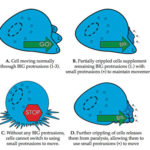
Although it may appear solid, the human body is full of moving cells. For example, the mass migration of cells helps shape the human body in the womb. Skin cells crawl towards each other during wound healing
Scissors? A truck? Or BOTH? Moonlighting proteins can do it all

Proteins are the molecular machines that perform millions of different jobs throughout the body. Everything we do requires specific kinds of proteins, from cutting molecules into smaller pieces when we digest our food, to carrying oxygen from
Improving Social Skills for adults with autism and co-occurring intellectual disabilities to promote workplace inclusion

Social behaviors are complex and differ in presentation across age groups and cultures. The development of social skills, are necessary to promote positive social interactions across a range of community environments, especially the workplace. The ability to
The choroid plexus: a new player in the (microbiome-)gut-brain axis

The healthy human gut microbiome contains 100 trillion bacteria, outnumbering the amount of human cells by a factor of 10. These bacteria are important in several crucial processes in our body. Hence, changes in the composition, caused
Mercury and cadmium rigidify eukaryotic lipid extracts but mercury also ruptures red blood cells

Although the serious adverse effects of Hg and Cd have been known for hundreds of years, the mechanisms of their toxicity are still poorly understood. The industrial revolution resulted in more toxic heavy metals in the environment
Using artificial intelligence to understand irritable bowel syndrome, chronic fatigue syndrome and fibromyalgia syndrome

Modern medicine is based on the concept of disease. Each disease has its own unique and specific pathophysiology – meaning that each disease has a biological fault that defines that disease and only that disease. Functional disorders
Don’t assume cause and effect is obvious: Why obesity isn’t to blame for errors in burn assessment

For several years, the medical community has been concerned that evaluations of burns are becoming less accurate. This is a problem because burns leak, and burn victims must receive supplemental fluids to compensate for the loss. If