
Climate change may add significantly to the impacts of pollution and habitat loss on fish populations
Climate change is seen globally as a major environmental risk, along with pollution and the loss of natural habitats. Many regions of the world are predicted to experience increasing climatic fluctuations and extremes, including either drought or flooding, but in general most are likely to undergo warming throughout this century. As a consequence species with temperature-dependent sex determination may be especially susceptible to climate change. Warmer temperatures during egg incubation have been shown to induce female-biased populations in many reptiles, including tortoises, turtles and crocodilians. Conversely, in lizards, fish and some amphibians, temperature elevation tends to induce male development, and male-biased sex ratios may be far more problematic for wildlife populations, as the numbers of egg-laying females are reduced. Other environmental stressors predicted to accompany climate change (reduced nutrition, overcrowding, inbreeding and, in aquatic environments, increasing chemical residues, acidification and reduced dissolved oxygen) may also generate male-skewed sex ratios (Fig. 1), and some of these stressors have been shown to have additive effects.

Fig. 1. Additive effects of environmental stress factors inducing male sex (♂) in fish
In order to examine the individual and interactive effects of climate change (warming), habitat loss (causing inbreeding) and pollution (from endocrine disrupting chemicals (EDCs)), collaborating scientists from AstraZeneca, the University of Exeter and Bangladesh Agricultural University conducted a series of laboratory and computer simulations on the zebrafish (Fig. 2). The zebrafish is a widely used model species and was selected for this research because it shows environmental/ temperature-dependent sexual differentiation and rapid maturation, enabling sex to be confirmed in 2 to 3 month old fish. Zebrafish are native to the Indian sub-continent and reproduce and develop during the monsoon season in flooded rice paddy fields, where they may be exposed to various agrochemicals.
The study chemical clotrimazole is one of many azole fungicides and the selected upper exposure concentration represented total combined azole concentration measured in the field. The laboratory results showed that clotrimazole exposure skewed sex-ratios significantly towards males, and the skew was amplified at warmer water temperatures predicted for the year 2100. Male-skews were also greater in inbred populations (those with reduced genetic variation) compared to outbred (genetically more diverse) populations. The combined effects of all three environmental treatments were shown to be additive, generating almost completely (97%) male populations in inbred zebrafish, maintained at elevated temperature (33°C), together with elevated clotrimazole (8 micrograms per litre) exposure. In contrast, outbred zebrafish maintained at the lower baseline temperature (28°C) with no clotrimazole showed a balanced sex ratio (48% males).
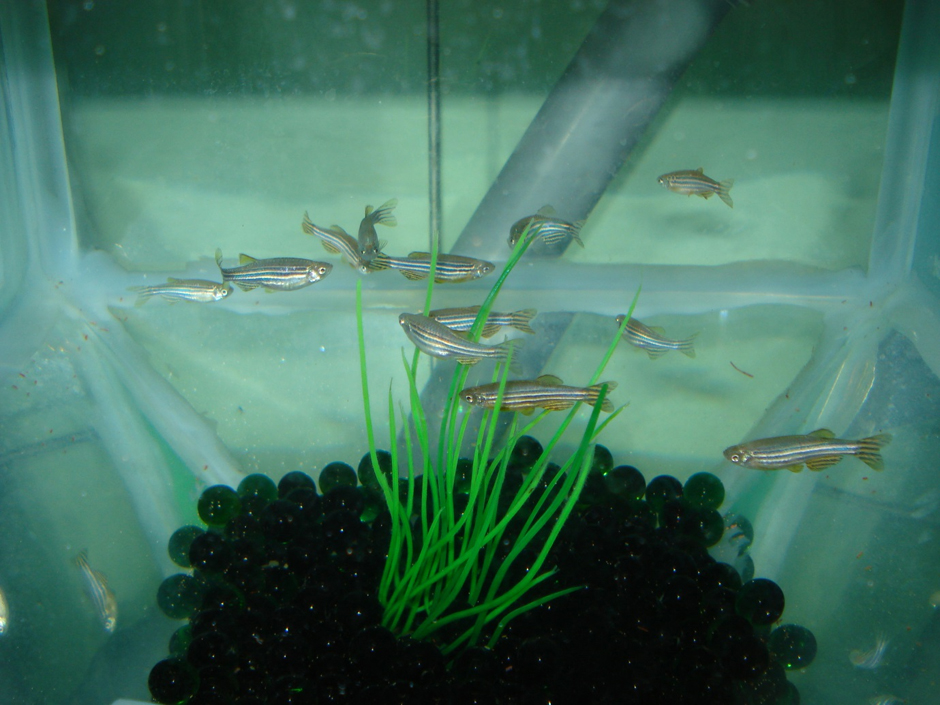
Fig. 2. Laboratory studies on wild caught zebrafish from Bangladesh
Laboratory results were then input to a computer-based population viability analysis (PVA) model to simulate the population-level effects of male-skewed sex ratios in zebrafish, and to predict population growth rate and probability of extinction for the various exposure scenarios. After running over 100 exposure scenarios, each one represented by 100 repeat simulations of 100 years of exposure, inbred zebrafish populations exposed to elevated water temperature and clotrimazole were shown to be more likely to decline (56-100% probability) compared with outbred zebrafish populations (0-19% probability). Male-skewed sex ratios of >82% in inbred zebrafish resulted in a three-fold reduction in population growth rate, whereas in outbred fish, larger (>90%) skews were required to induce smaller population declines, amounting to two-fold reductions in population growth rate.
Overall, the study showed that interactions between elevated temperature and chemicals, which skew sex ratios toward males, can have profound impacts on populations of species with environmental sex determination and/or differentiation. Furthermore, in combination with habitat loss, these impacts are likely to be greater for isolated, inbred and endangered populations.
Andrew Ross Brown
Biosciences, College of Life and Environmental Sciences, University of Exeter, UK
Publication
Climate change and pollution speed declines in zebrafish populations.
Brown AR, Owen SF, Peters J, Zhang Y, Soffker M, Paull GC, Hosken DJ, Wahab MA, Tyler CR
Proc Natl Acad Sci U S A. 2015 Mar 17

Related Articles:
 | Does UV-B radiation modify gene expression? Frequently the harsh environmental conditions, such as, high temperatures, low freezing conditions, high levels of PAR and UV-B sun radiation induce remarkable adaptive reactions in plants. These responses suggest that… |
 | PEPITEM supports new bone and blood vessel growth in… While bones may appear solid and unchanging, they are a living tissue that is constantly being broken down and rebuilt in a process known as bone remodelling. Specialised cells (called… |
 | Microbial community assembly and the microbiome revolution Microbial communities (i.e. groups of potentially interacting microbial populations that co-exist in space and time) most commonly represent complex and highly diverse assortments of microbial populations, each possessing different genomic… |
 | Boosting chicken health with tea extract: a natural… In modern poultry farming, chickens often face stressful conditions such as overcrowding, poor air quality, and contaminated feed. These conditions can lead to oxidative stress, a state where an excess… |
 | Linking copper, tyrosines and protein aggregation in… The prevalence of Alzheimer’s disease (AD), the most common cause of dementia nowadays, is expected to increase within the coming years, representing a serious threat for society and the healthcare… |
 | Ferrate technology: an innovative solution for… Sewers might be out of sight, but they play a huge role in shaping the well-being of a society. They quietly carry away all the wastewater from our homes, businesses,… |



Leave a Reply
You must be logged in to post a comment.