Tag Archives: brain
Conditioning the brain immune system through physical activity

Staying physically active is one of the most beneficial things that a person can do for maintaining whole-body health. It is well understood that physical activity is important for building muscle, improving cardiovascular health, and boosting metabolism.
Epileptic encephalopathies in children: Animal models may change the word “catastrophic” to “hopeful”

Seizures are a sign of brain dysfunction caused by abnormal, hyperexcitable brain circuits. Clinical seizures range from brief staring spells to massive whole – body convulsions. The developing brain is especially prone to seizures and seizure-related brain
Why won’t my doctor scan my brain?
An estimated 16 million people each year go to their doctor because of a headache. Many are concerned that they may have cancer, a stroke or an aneurysm, and request a brain scan. However, most headaches do
The brain doesn’t navigate quite like a GPS

Neuroscientists’ discovery of grid cells, popularly known as the brain’s GPS, was hailed as a major discovery. But new results suggest the system is more complicated than anyone had guessed. Just like a driver in a car,
Sugar consumption can be reduced by tonic activation of dopamine reward pathway

Rewarding ( pleasurable ) and aversive events give us dissimilar perceptions, which powerfully shape our decisions and therefore behavioral outcomes. In fact, chemical changes, which take place in our brain, are very different under these opposite circumstances.
Do all children have equal access to Phase I cancer trials?

Approximately 60% of pediatric cancer patients participate in clinical trials compared to only 5% of adult cancer patients. These pediatric clinical trials have been instrumental in improving the 5-year survival rate of childhood and adolescent cancer patients
Cerebellar and brainstem malformations

The development of the cerebellum and brainstem is a highly complex process that involves a large number of genes. Mutations in these genes may cause an abnormal development of the cerebellum and brainstem and result in several
Non-invasive brain stimulation: how reliably can we change your mind?
Non-invasive brain stimulation is becoming increasingly popular within scientific research. This is because it has the ability to painlessly influence targeted regions of the brain, without the side effects associated with many medications. At first glance, the
Brain structure predicting functioning at a later stage in live in individuals at increased risk for psychosis
Psychosis is a severe mental disorder that is characterised by symptoms of hallucinations, delusions, confused and disturbed thoughts, and lack of insight and self-awareness. Most individuals who are at increased risk for developing psychosis do not develop
Strollers and carriers cause average of two injuries every hour in the U.S.
The Center for Injury Research and Policy of the Research Institute at Nationwide Children’s Hospital published research about children getting injured from strollers and carriers in Academic Pediatrics in August 2016. Parents use these products every day
Acute stroke in 3 brain territories suggests cancer

Over the past several decades cancer has increased to rival heart disease as the leading cause of death in the United States. Non-infectious endocarditis and cancer-associated hypercoagulation (C-AH) have both been suggested as a source of stroke
The risks of brain damage after hyperthermia

This article describes the unintended neurological consequences after a period of fever or hyperthermia. A fever may have many causes, including after strenuous exercise, being in a heatwave, taking certain drugs and medications, and various illnesses. Hyperthermia
Do we hallucinate when we sleep?
By definition, hallucinations occur only when we are fully awake state. Yet the similarities to experiences that occur during the transition between sleep and wakefulness; dreams; and incubus phenomena have been known for a long time. In
How sugar and fat affect our brain leading to a high blood pressure?

Obesity is a serious, chronic and pandemic disease that can have a negative effect on many systems in our body. People who are overweight or obese have a much greater risk of developing serious diseases including hypertension.
Reading “don’t cut the bread” triggers motor inhibition in the brain

All languages have negation markers, which allow the speakers to deny something, for instance the presence of an object (there is not bread), a feature (John is not cleaver), an action (you do not play piano), and
Chromosome gains and losses in the human brain are probably less important than previously thought

In general, each human cell contains 46 chromosomes: 23 chromosomes from each parent. Before a cell divides all chromosomes are duplicated. The cell has several mechanisms to ensure that during cell division the chromosomes are evenly distributed
Can prolonged exposure to cortisol excess have an irreversible effect on emotion-related brain areas?
Cortisol is a hormone produced in humans by adrenal glands and it is necessary to live. In healthy people, cortisol level naturally increases in response to stressful situations, but when cortisol level in the body is too
A new representation of the nervous system: the hypermatrix

It is a big challenge to develop the most appropriate mathematical model to describe the electrical activity of different groups of neurons. There are more neurons in the nervous system (about 86 billion) than we have seconds
CSF-1 receptor and its activators – new players in the nervous system and neurological disease

Macrophages, meaning big eater (from the Greek, makros (large) and phagein (to eat)), are cells, present in all tissues of the body, that engulf and degrade large foreign particles, such as microbes and also scavenge abnormal self
Listen up: Our brains prepare to ‘tune in’ to a voice of interest
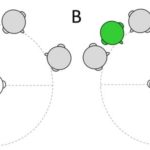
A fundamental challenge of human communication is to understand what someone’s saying in the presence of background noise—for example, when several conversations occur at the same time. In these situations, accurate speech understanding relies on the critical