Monthly Archives: November 2015
The hidden link between aquaculture production and freshwater appropriation
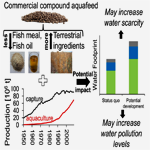
The aquaculture sector is steadily growing and so is the demand for aquafeed. Each fish and crustacean has certain needs in terms of protein, fat, carbohydrates, vitamins, minerals, among others. The question is how those needs can
The social gap in lifetime in good health increased during the financial crisis in Denmark

The trend of increasing social health inequality persisted during the financial crisis in Denmark. In addition to about 4 extra years of life 50-year-old Danes with a high educational level could expect to live more than 9
The walking brain

Walking is the most common locomotion strategy to move from one to another place. Normally, we do not think about our steps and we would consider walking as a natural and automatic behaviour. However, more challenging environmental
Non-invasive real-time prediction of inner knee temperatures during therapeutic cooling

Measurements in biomedicine are often difficult to perform because human subjects are involved. Many examples can be found, particularly in clinical procedures, where in vivo measurements are often not as accurate as desired, difficult, dangerous or even
Exploring the link between the baby boom and aging prisoners

America’s prisoners are getting older and concern over this problem is rising. Not only are inmates over the age of 50 the fastest growing prison population in the U.S., the increased need for healthcare services among this
Employment of migrant care workers by Italian families assisting older Alzheimer’s disease patients
A rising phenomenon across the European Union (EU) is the increasing presence of migrant care workers (MCWs), privately employed by families of older people in need, who take over different tasks: supervision, drug administration, support in mobility
A wearable UV-LED medical device for automatic disinfection of stethoscope membrane

The medical literature has demonstrated the importance of healthcare-associated infections ( HAI ), which are an huge worldwide problem because of health complications, mortality ( EU + USA 140.000 death/year ), length of hospitalization and costs for
Cancer connection: study of inflammation offers tantalizing clues

The body displays a remarkable capacity for healing wounds— a process we often take for granted. Within a day, a finger we’ve carelessly nicked returns to normal. Behind the scenes, a crucial mediator of the body’s inflammatory
Too much or too little of one gene, CHRNA7, is associated with many neuropsychiatric disorders

In the human genome, certain regions are unstable and are found to have missing ( deletions ) or extra ( duplications ) pieces of chromosome. Many of these deletions and duplications have been implicated in neurological disease,
Onco-Nephrology: the frontier of cancer and kidney disease

Kidney problems can result from cancer or its treatment. Patients with kidney disease can develop cancer. These clinical problems are challenging and significantly affect morbidity and mortality. Yet until recently they have not had focused attention. Cancer
Oil penetration into the human skin

For a long time, oils have been the basis of many skin care products and ointments in the cosmetic industry and medicine. Oils are supposed to be non-penetrating substances, therefore they are neutral for the human skin
The prognostic value of tumor markers and cytokines in patients with squamous cell cervical cancer

Optimal management of cervical cancer consists of appropriate treatment methods after the precise staging, following detection as early as possible, and the best salvage therapy. Early detection of recurrence, especially at the early stages in cervical cancer
Conservation of biological resources, Toxoplasma gondii tachyzoites

The conservation of biological resources is an essential factor for all biological research, and is the first function of a Biological Resource Centre. For parasites, this conservation remains difficult due to the structural complexity of the microorganisms.
The discovery of an ancient symbiosis challenges a decades old paradigm

The vast majority of land plants form intimate nutritional partnerships with filamentous fungi wherein fungal-acquired mineral nutrients from the soil are traded for plant-generated organic carbon. These mutualistic associations, known as arbuscular mycorrhizas (“tree-like fungus-roots”), are widely
Chaperones’ seduction

Molecular chaperones are a very special class of proteins found in all organisms from bacteria to humans. Like their name suggests, they accompany and supervise the correct folding of all the other proteins in cells. This process
What does a guardian protect genomic DNA from?

Living organisms can achieve their propagation through copying (replicating) the genetic information, coded in DNA sequence, and dividing them to each daughter cell. DNA sequence is a basic element and its conservation is essential for individual life
Voice changes in real speaking situations during a day with and without vocal loading
Employment in the modern world is characterized by an increasing number of employees working in professions that require continuous and intense vocal usage. Among these vocally demanding professions (in which voice is a main professional tool) one
The art to irradiate the Internal Mammary Nodes (IMN) in breast cancer patients

Radiation therapy (RT) has demonstrated strong clinical benefit in patients with breast conservative surgery or with radical mastectomy and who are at high risk for relapse. Unfortunately, this benefit was counterbalanced by an increased risk for death
A method that may raise hope of developing new treatments for Meniere’s disease and other inner ear disorders with hearing loss, tinnitus and dizziness
Disorders of the inner ear are rather common and may lead to dizziness, tinnitus and loss of hearing. Several of those disorders may include an increased swelling, i.e. hydrops, of parts of the inner ear as a
What do we know and what can we do about asthma?
Asthma affects more than 300 million people of all ages and both genders worldwide and causes a huge financial burden on health systems and governments. Asthmatics have sensitive airways which over react to triggers such as allergens,