Yearly Archives: 2016
How localizable are language brain areas?

The interest in understanding how language is “localized” in the brain has existed for centuries. During the late 19th and early 20th century, the brain’s language area was thought to correspond to the region around the Sylvian
Rhythm makes the world go round: neuroimaging reveals the “embodied” roots of high-level social cognition

Significant aspects of information processing in humans are not shared with other species, such as the ability to imagine the mental states of others. However, to some extent this unique ability still seems to depend on “older”
Explore care seeking behavior of older adults with hip fracture in Odisha, India
Hip fractures commonly occur in adults over 50 years mostly due to simple falls. Rough estimates suggest 600,000 adults suffer hip fracture injury annually in India. It is expected to rise in coming years as the population
Cerium oxide nanoparticles may be of therapeutic value in chronic liver disease

What is this? We use Cerium oxide NPs (CeO2NPs) to treat cirrhosis in model rats and we observe how it has dramatic beneficial effects in reducing inflammation and allowing tissue reparation What makes nanoceria very appealing is
Computerized assessment of neuropsychological performance in schizophrenia
In clinical studies, intellectual performance is most often measured with standardized neuropsychological paper-and-pencil tasks. Such tasks can measure an individual’s performance in different domains of intellectual performance such as speed of processing, attention/vigilance, working memory, verbal learning,
Test items may be unfair

Intelligence tests and other achievement tests always aim at measuring an ability that is not directly observable. What one can observe is how a person performs when trying to solve a collection of items (master a collection
The European Human Behaviour and Evolution Association (EHBEA)
London, UK, from 5-8 April The European Human Behaviour and Evolution Association (EHBEA) is an interdisciplinary society that supports the activities of European researchers with an interest in evolutionary accounts of human cognition, behaviour and society. EHBEA
Ribose hydroxyl group summary

We usually think of enzymes – the molecules that drive all the reactions in our cells – as being proteins, but many scientists believe that the earliest enzymes may have been made of RNA. RNA, which is
Making a good drug against a bad virus better

Recent advances in the treatment of chronic Hepatitis C virus (HCV) have led to a number of treatment options using only pills taken once-a-day that can lead to the elimination of the virus – a cure. Using
Human brains do not belong to two distinct types: ‘female brains’ and ‘male brains’

Sex categories – whether one has female or male genitalia – are fundamental for reproduction. They are also one of the most important categories that shape the social world. No surprise then that scientists and the general
Metal–organic framework for “NO” sensing!

Nitric oxide (NO) is a free radical which is found to prevail as a colourless gas. It has a very short life-time (of few seconds) and yet regulates several biological processes in living systems. For its participation
Genes regulating Wolbachia cell division

Bacterial infection underlies many devastating diseases, yet bacteria also play a central role in the maintenance of human health and well-being. From aiding in host food digestion and limiting unfavorable bacterial growth to causing paralysis or even
Detecting nerve gases VX and Tabun with a handheld device

Threats from nerve gases, or more accurately termed chemical warfare agents, constitute a serious security issue of increasing global concern because of surging terrorist activities. A big problem with nerve gases are that they are very challenging
Prognostic value of trans-thoracic echocardiography in patients with acute stroke and atrial fibrillation
Currently, ischemic stroke (which occurs when a blood vessel carrying blood to the brain is blocked) in patients with atrial fibrillation (AF), an abnormal heart rhythm characterized by rapid and irregular beating, can be successfully prevented with
The use of multisite ultrasound in cardiac arrest – the SESAME-protocol

Cardiac arrest is the most critical emergency. The sudden interruption of oxygen supply damages the brain after some minutes. Finding a cause for efficiently fixing the problem is the main target of the frontline physician. Ultrasound is
C-H bond activation by metal carbene

C-H bonds, alongside with C-C bonds, are the most common chemical bonds that constitute organic molecules. C-H bonds are ubiquitous and they are also very stable. The replacement of the hydrogen atom of the C-H bond with
Sequence of the plant beneficial biocontrol agent Pseudomonas fluorescens DSM 8569
Pseudomonas represents an abundant bacterial group that can live in the soil. In this habitat many organisms like fungi, bacteria, plants or insects live together, often intensively interacting in close communities. The composition of these communities is
Are children, adults and elderly women in Greece meeting dietary intake recommendations?
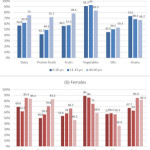
Ensuring adequate nutrient intakes is vital not just for preventing deficiencies, but also for optimizing health and wellbeing in all life stages. Despite the high prevalence of overweight and obesity and the overconsumption of calories, still inadequate
A paradigm shift in self-cleaning materials

In order to keep touchscreens, windows and walls free of dirt and fingerprints they need to be coated with anti-smudge materials. For practical applications, anti-smudge materials must be water- and oil-repellent, wear-resistant, optically clear and readily applicable
Human exposures to Bisphenol A alternatives and derivatives with equal or more harmful effects

Recent years have witnessed an exponential interest in the use and research on bisphenol A (BPA). BPA is one of the chemicals ranked very high in the chemicals’ list with the highest production volume estimates worldwide. BPA