Category Archives: Research
What are the psychological drivers of religious history?
When the Buddha became “Enlightened” he realised that what is important about human beings is their ethical intentions. These are the grounds of karma in Buddhism. And he realised too that everything we call a “thing” is
“Contagious and bad”. The stigma of Mycobacterial infections

Two diseases caused by mycobacteria, Tuberculosis and Leprosy, not only are they quintessential in the history of infectious diseases and humanity, but have survived the passing of the centuries still affecting millions around the world. Being present
Application of ultrasensitive electrochemical biosensors for specific analysis of a glycan on a prostate-specific antigen

Prostate cancer (PCa) is the second most common cancer worldwide, accounting for more than 1.1 million cases in 2012. The statistics says, that about 1 man in 7 will be diagnosed with PCa during his lifetime with
A figure-of-eight molecule twists the red light

Development of fluorophores for CPL, circularly polarized luminescence, has attracted much attention. CPL has large potential toward future applications such as 3D displays and biosensing. Major challenges in creating good CPL fluorophores are; 1) large anisotropic dissymmetric
New types of functional pasta enriched with lyophilized tomato or wheat bran antioxidant extracts

The increasing demand for healthy foods has encouraged food companies to direct new research and development activities towards products providing, beyond basic nutritional functions, beneficial effects for health and/or reducing the risk of chronic diseases, i. e.
A calixarene derivative mediates rapid detoxification of the deadly poison VX

On 13th February 2017, the half-brother of the North-Korean dictator Kim Jong-un was poisoned, supposedly with one of the deadliest known chemicals, namely, the nerve agent VX (O-ethyl S-[2-(diisopropylamino)ethyl] methylphosphonothioate). This poison is so effective that contamination
Cushing’s, coping and quality of life

Cushing’s disease (CD) and Cushing’s syndrome (CS) are rare illnesses in which the body is flooded by an excess of the hormone cortisol, leading to characteristic and severe symptoms, among them central weight gain, easy bruising, diabetes
Molecular mechanism of phenotypic plasticity

Darwinian evolution is considered to be the way that life adapts in every possible environment in Earth. The great evolutionary biologist of the past century Theodosius Dobzansky used to say: “Nothing in Biology Makes Sense Except in
Conformal invariants for landmark curve based brain morphometry analysis

Abnormal structural changes measured on cortical surfaces are important biomarkers for Alzheimer’s disease (AD). In brain imaging research, landmark curves are usually delineated on cortical surfaces to represent significant sulcus and gyrus patterns. Landmark curves are widely
Osteosarcoma – lost in translation

A 16-year-old boy with pain around the knee of two months’ duration demonstrates a lesion in the epiphysis of the distal femur (long bone). The differential diagnosis may be broad, but the pathologist is able to achieve
Milk of breast is best: protection against RSV and subsequent wheeze with breastmilk
Respiratory syncytial virus (RSV) is a significant pathogen infecting infants and young children; approximately 70% of infants are infected with RSV before their first birthday and almost all children have been infected at least once by two
A potential radiotracer for imaging the lungs

Routine patient lung scans in the nuclear medicine department have for decades, employed a radioactive technetium-99m-aggregated-albumin particle injection dose, in conjunction with a ventilation dose of Tc-99m-aerosol in tandem. The lung scans are usually requested for patients
Surrogate endpoints for overall survival in lung cancer patients treated with PD-1/PD-L1 blockade

Anti PD-1/PD-L1 antibodies are becoming key therapies in the treatment for advanced non-small-cell lung cancer (NSCLC). Surrogate endpoints for overall survival (OS) such as tumor response and progression-free survival (PFS) are useful to detect drug efficacy earlier,
Fingernails – a window into the world of disease
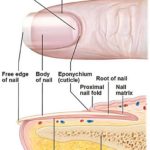
If our eyes are the windows into our soul, our fingernails can be viewed as windows into our health. The finger nail plate and its surrounding supporting structures (the fingernail unit) (Fig. 1) is an often overlooked
Growing-up in a stressful environment affects the levels of glutamate in the hippocampus in adult depresses subjects

Mood disorders are emotional disturbances consisting of prolonged periods of excessive sadness, excessive joyousness, or both. Exposure to harsh parenting practices or to maltreatment during childhood can increase individuals’ vulnerability to mood disorders and the severity of
Fish migration: a simple mathematical description

Diadromous fishes migrate between rivers and seas, and are key drivers of surface water ecosystems and food webs. Analyzing migration of diadromous fishes is therefore a core for assessment of surface water systems from both biological and
The arms really can give the legs a helping hand in rehabilitation of human walking

The emergence of upright, bipedal walking is a characteristic of human evolution that separate us from our quadrupedal cousins—other animals. The upright walking posture freed our hands so that we could perform skilled tasks like signaling, carrying,
Grafting stem cells in 3D arrays

Neural transplantation has continued to show promise as an effective treatment option for neurovascular, traumatic and neurodegenerative disorders. Previous work in neural stem-cell transplantation has demonstrated the ability of distinct neural cells to repair damage and to
Crosstalk between gut, brain and metabolism in polycystic ovary syndrome

Polycystic ovary syndrome (PCOS), the most common endocrine disorder of women in childbearing age, is characterized by hyperandrogenism, oligo-anovulation and polycystic ovaries in ultrasound. Obesity, a global epidemic, generally accompanies PCOS; but the link between these two
Past, present and future management of low-lying rectal cancers

In recent decades, great strides have been made in the management of the hardest to treat rectal cancers. If diagnosed with a low rectal cancer in the 1970s or 1980s, it was likely that after surgery the