Yearly Archives: 2016
Psoriasis, more than a skin disease? The involvement of gut microbes

Psoriasis, is a chronic inflammatory skin disease with a high prevalence, of which the exact cause is unknown. Genetic, immunologic and environmental factors all are involved. Psoriasis and Inflammatory Bowel Disease, including Crohn’s Disease and Ulcerative Colitis,
Vitamins and minerals in control of serious diseases?
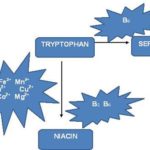
We all know that vitamins and minerals are important, but why? The amino acid L-tryptophan is “essential” for mammals, and it must be obtained in the form of food. L-tryptophan can be utilized for protein synthesis, and
Fecal microbial transplantation: a novel approach to eradicate antibiotic-resistant gut bacteria

The discovery of antibiotics in the early 20th century had an enormous impact on modern medicine, dramatically reducing mortality associated with infections. However, the emergence of drug – resistant pathogens has occurred due to greater availability and
A simple assay to measure phosphatidylethanolamine methyltransferase activity

Enzymes are proteins that help chemical reactions to occur within cells and thus, they are essential to their life and function. They produce most of the molecules found in cells, and are classified by their function and
From crime scene to crime lab: potential interactions between blood detection methods

Crime scene investigators and forensic scientists at the crime laboratories both utilize rapid, presumptive tests to determine the likelihood of the presence of blood. At the crime scene, investigators commonly utilize Bluestar® or Luminol to produce a
Einstein and the measurement problem: Is he right again?
In quantum mechanics there exists an unresolved and much debated foundational issue known as the ‘measurement problem’, of how and where one goes from the microscopic quantum world to the macroscopic classical world when an abstract entity
Fish are exposed to hundreds of pharmaceuticals. How to identify drugs that pose the greatest aquatic risk?

After consumption, human and veterinary drugs or their breakdown products end up in streams and rivers via wastewater effluent discharges into water bodies. Since this is a continuous process, aquatic animals are chronically (low concentration, long-term) being
The constant cost of short-term memory loss
When we try to make sense of what someone says to us we maintain a record of this information in memory. Many psychologists think that humans evolved a ‘verbal short-term memory’ system for this purpose, and we
Survival analysis using Excel: learn it, use it and improve your work

Questions about disease prognosis and patient survival are of central importance in everyday hematology/oncology clinical practice. If a person working as a practicing clinician would like to evaluate his/her own work or check if some factor affects
Shipwrecks, tree rings and hurricanes

Climate models for the future generally agree that globally, tropical cyclones will become more intense but less frequent in the 21st century. Projections on the regional level, however, vary greatly and have large uncertainties. For the North
The synergistic role of prolactin and estrogen in breast cancer requires PAK1
In 2016, the American Cancer Society estimates about 40,000 deaths will result from breast cancer. This makes breast cancer the second leading cause of cancer-related among women. Despite the frightening statistics, the death rates from breast cancer
Root teeth contact by fixation screws during jaw surgeries: incidence and consequences

During the surgeries to correct jaw deformities, known as orthognathic surgery, is necessary to stablish the correct dental occlusion. For that, in the past it was used wires and metal arch bars that usually causes damages to
Understanding why behaviours are challenging for dementia family carers
Dementia is a global health challenge that confronts health and social care systems today. It is characterised by global cognitive impairment. However, it is the disruption to daily living and in particular the non-cognitive, (behavioural and psychological)
Components of tea may help in the fight against bioterrorisum

Ricin toxin (RT), a protein produced by the castor bean (Ricinus communis) and is rated by the US Centres for Disease Control and Prevention as a level B biothreat. This is because it is: 1) available and
Challenging nature conservation in a peri-urban area

Constructed wetlands are treatment systems that use natural processes involving wetland vegetation, soils, and their associated microbial assemblages to improve water quality. The Parco Naturale Regionale Molentargius-Saline, located in southern Sardinia between the two cities of Quartu
Advanced technology in the cath lab: CT, VR, robots, and 3D printing

Precision medicine or “personalized medicine” is poised to become a cornerstone of future medical diagnostics and therapies. The idea is to use a patient’s own information to create treatments that are tailored to them specifically. This type
Behavioral detection of nicotine via cigarette smoking

Perceiving nicotine’s effects in the brain (i.e. interoceptive stimulus effects) helps explain why one billion people worldwide enjoy tobacco smoking and, perhaps, why repeated smoking leads a smoker to becoming dependent on tobacco. Such effects are typically
The challenge and impact of engaging hard-to-reach men in regular physical activity and health behaviours
Men from hard-to-reach populations frequently report poor health statistics and have therefore been highlighted as a particular area of concern for men’s health practitioners and professionals.It has been argued that participation in regular physical activity and engagement
How plants survive during drought seasons? Polyphenols: the natural antioxidants

The earth has a variety of ecosystems. One of them is the semiarid regions characterized by seasonal rainfalls and long periods of drought. The native plants species of these environments have the ability to survive and maintain
Potential new therapy for painful bladder syndrome with a pregnancy hormone, human chorionic gonadotropin
Painful bladder syndrome, also called interstitial cystitis, is a painful debilitating chronic bladder disease that primarily affects 40-60 year old women. Women of all races, ethnic and socioeconomic backgrounds are susceptible to the disease. The symptoms include