Yearly Archives: 2016
Is HDL cholesterol always good for you? Surprises, overturns and promises

According to the World Health Organization, coronary heart disease is a major cause of death worldwide. In 2008, 17.3 million people died from heart disease, and this number is expected to rise further, reaching an estimated of
Loneliness matters for people with psychotic disorders

When you ask people with a psychotic disorder, like schizophrenia, what challenges them most in daily life they are likely to say – ‘loneliness’. As nearly everyone can attest, loneliness is painful. It’s the distressing feeling that
The future of clinical research: developing new drugs faster using electronic health records
Innovative medicines can prevent, cure, slow or alter the evolution of diseases, and bring real value to patients. Despite increased investments in research and development, fewer medicines are being brought to market due to the increasing complexity
Dispersion of particle emissions from quarries in complex terrain

Quarrying and surface mining operations are area sources of dust (suspended particles) that may cause considerable air pollution. Such sources, by their nature, are characterized by lack of detailed information about the location of the mobile mining
Neonicotinoid insecticides in the honey bee and bee products from hives in central Saskatchewan

There have been a lot of news reports regarding the neonicotinoid insecticides, (NIs) their use and the effects that these may have on the European Honey Bee, (Apis Melifera). The prairies of Canada is one of the
Eye movements: a window to the brain of children with fetal alcohol spectrum disorder
In this paper we examined the accuracy and characteristics of eye movements in children with fetal alcohol spectrum disorder (FASD) and compared these to healthy, typically developing children. FASD may occur when a mother drinks alcohol during
Do you know that some legume species have great isoflavone contents?

Different plant species are often indicated as natural sources of healthy components, such as the well-known phenolic compounds. However, considering the great variety of plant species, as also the diversity of their compounds, the true potential of
Fertility of Drosophila offspring depends on the correct choice of bridegroom

The cause of offspring sterility of some pairs of Drosophila melanogaster fruit flies is the genetic incompatibility of the parents. The infertility of progeny (mainly of intraspecies hybrid daughters) in such cases occurs only in one cross-direction.
Streamlined construction of a natural product framework

Nature makes biologically active organic molecules bearing complex polycyclic frameworks equipped with functional groups so efficiently from simple starting materials. For example, arylnaphthalide lignan natural products derived from plants, such as diphyllin, justicidin A, taiwanin E, and
Theta burst like stimulations lead to formation of BDNF dependent memory traces

Creating and storing memory traces in our brains is essential for learning, logical thinking, creativity, and for being able to recall persons, events, and facts throughout life. Memory traces are created by joint electrical activity in nerve
ZNRF1: a key molecule activated by reactive oxygen species to cause neuronal degeneration

Neurons, the major component of our brain, have long processes (called “axons” and “dendrites”) to communicate with other neurons and cells. In many brain diseases that old people get suffered from, such as Alzheimer’s disease, Parkinson’s disease,
A growing epidemic: HPV-related oropharyngeal carcinoma
The incidence of Human Papillomavirus(HPV)related oropharyngeal cancer has increased by epidemic proportions (225%) over the past 30 years. If it continues to increase at the current rate, the incidence of HPVrelated oropharyngeal cancer will be even greater
Lung mechanics and pulmonary function testing in cetaceans

Marine mammals live a life of dual constraints. These air breathing animals need to spend time at the surface to replenish O2 used and remove CO2 produced by metabolism. However, food is underwater and the longer they
Microfluidic live-cell microarrays
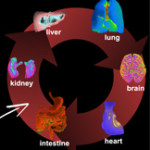
In recent years, the development of new drugs and therapies has decelerated despite the application of combinatorial biochemistry and new therapeutic strategies, such as nanoparticle-based drug delivery systems. Although the numbers of newly developed compounds have steadily
Why do people undergo genetic testing – for personal benefits, for family, or for science and society?

Genetic testing is an important tool to detect gene mutations (e.g., BRCA1/2) that increase the risk of cancer, especially among those who are known to have higher chances of carrying these mutations such as Ashkenazi Jewish individuals.
Prader-Willi syndrome: most common genetic cause of life-threatening obesity

Prader-Willi syndrome (PWS) is a rare complex multisystem genetic disorder. It is recognized as the most common known genetic cause of obesity in humans which can be life-threatening, if not controlled. PWS affects about 1 in 15,000
Thiamine supplementation reduces anxiety in severely alcohol dependent men

The caustic effects of alcohol on the gastrointestinal tract as well as lifestyle factors impacting dietary habits can lead to severe nutritional and vitamin deficiency in individuals with chronic alcoholism. Vitamin B1 deficiency, also known as thiamine,
A formula for better asthma, cold and heart medications

Imagine that you had found a way to drop the dose of your asthma medication ten-fold, increase its duration of activity from a couple of hours to all day, and still get the same relief as before.
Impact of phosphate mining on the hydrology and water quality of a river basin in China

Phosphorus (P) is an essential nutrient to plant production. Phosphate mining (PM) activities have been strongly motivated by the increased marketing of fertilizer produced by PM. The PM activities (i.e., processes of exploitation, exploration, and beneficiation) can
The origins of dialog: mothers in 11 countries respond contingently to their babies’ vocalizations

Mothers’ speech to babies is known to promote their language skills and stimulate brain development. Mother-baby speech has been studied a lot in the United States, but less is known about mother-baby speech in other countries. This