
Author Archives: Tigran Dadalyan
Sequence of the plant beneficial biocontrol agent Pseudomonas fluorescens DSM 8569
Pseudomonas represents an abundant bacterial group that can live in the soil. In this habitat many organisms like fungi, bacteria, plants or insects live together, often intensively interacting in close communities. The composition of these communities is
Are children, adults and elderly women in Greece meeting dietary intake recommendations?
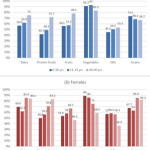
Ensuring adequate nutrient intakes is vital not just for preventing deficiencies, but also for optimizing health and wellbeing in all life stages. Despite the high prevalence of overweight and obesity and the overconsumption of calories, still inadequate
Fishing highly explosive and toxic TNP

Water pollution by anthropogenic sources such as industrial effluents, mining activities, use of fertilizers and pesticides, dumping grounds is increasing in alarming rate. Picric acid (2,4,6-trinitrophenol, TNP) is highly explosive molecule used in armour piercing shells, bombs,
Osteopontin is a novel player and potential biomarker in hepatosplenic schistosomiasis mansoni
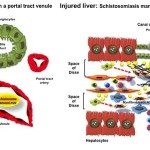
Schistosomiasis or bilharzia is a tropical disease caused by worms of the genus Schistosoma. Over 440 million people from 76 countries and territories are infected (Fig. 1). This water-based disease is considered the second most important parasitic
Ionic liquid solubilities in water: a janus phenomenon

Ionic liquids are a new class of solvents often claimed as « green » because they are non-flammable and non-volatile. In the search for better environmental industrial processes, they are thus an appealing choice to replace toxic, flammable and
Radiotherapy in palliative treatment of metastatic NSCLC: not all one and the same

The role of an editorial is to incorporate the results of a new relevant study in the scientific scenario, shedding light on some particular results of the trial which can change the clinical practice. The starting point
Finding aroma clues in the human breath to diagnose diseases

History of human odor analysis in disease diagnosis The use of the sense of smell as an indicator of human disease probably originated with Hippocrates (circa 400 BC). Early medical practitioners recognized that the presence of human
Dolphins help one another
Dolphins often help one another, assistance occurring in a variety of contexts that range from babysitting another dolphin’s calf to cooperative foraging to efforts to save another dolphin’s life. In this report, we describe the helpful efforts
Selective naked-eye sensors for real time detection of mercury ion in water

Mercury (Hg) is one of the most harmful and toxic chemical pollutants, which is released into the environment through natural or industrial sources. This dangerous heavy metal has the ability to enter the food chain and accumulate
Do the different actions required to gain a palatable food make a difference in the activation of the brain?

The motivated behaviour that underlies the food intake is a complex process mediated by various neural circuits. One of these is the mesolimbic system that employs the dopamine (DA) as neurotransmitter. In particular, in the responsiveness to
Towards wearable electronic devices that are powered by sweat

How would it be to charge your smartphone or iPod with your sweat while training? This would definitely be a green way to power portable electronics that you use everyday! The benefits of such attractive energy convertors,
Milk exosomes for drug delivery

The need to effectively deliver drugs to target site has employed a multitude of substances varying from biological to a chemical nature and solid metals for the preparation of tiny drug delivery vesicles called nanoparticles. However, factors
CD164 helps physicians to diagnose and treat cancer in Sézary Syndrome

Cutaneous T-cell lymphomas (CTCL) represent malignancies of the T-lymphocytes that go to or reside in the skin. Roughly 50% of all CTCL cases are Sézary Syndrome and Mycosis Fungoides. The typical external manifestation of the disease is
Side effects of radiation therapy: Why me?

Most lung cancers are treated with radiation therapy, often in high doses. Although these treatments are absolutely required to prolong life (by killing the tumor or slowing its growth), radiation treatment can have negative side effects that
Extended VATS lobectomy

A lobectomy is the standard operation for removal of a lung cancer. Traditionally, it is performed through a large incision (approximately 15 cm or 6 inches) at the side of the chest. This incision, termed a thoracotomy,
Bleeding and thrombosis in a patient with primary antiphospholipid syndrome using norethisterone
Antiphospholipid syndrome is an autoimmune hypercoagulable state caused by specific antibodies, and it is known to be associated with the occurrence of blood clots, or thrombosis, in the veins and/or arteries. However bleeding is rarely associated with the syndrome. Only a few cases
My research history – from molecular structure to surface science
Investigation of the molecular structure of SiCl4 using gas electron diffraction (GED) was the topic of my research I picked up when I started my graduate study at Department of Chemistry, the University of Tokyo. However, initial
Informational analysis to assess diagnostic accuracy of a medical test

Suppose one has a new diagnostic system (a computed tomography or ultrasound scanner, …), or a new diagnostic test for detecting a disease (diabetes, prostate cancer, …). Obviously we need to compare the performance of the new
How magnetic interaction between two distant paramagnetic metals is influenced by central diamagnetic cyanidometal?

Magnetism is an ancient and classic physical phenomenon and will be forever interesting topics. Molecule-based magnetic materials, in which the structural building blocks are molecular in nature, are of increasing interest because they provide fundamental insight into
Skin versus nerve as a source of cells for the treatment of spinal cord injury
Following injury to the adult human spinal cord spontaneous repair processes fail resulting in life-long functional deficits below the level of injury, which can include paralysis, absent or abnormal sensory perception, chronic pain, and diminished cardiovascular, respiratory,


