
Author Archives: Tigran Dadalyan
Shipwrecks, tree rings and hurricanes

Climate models for the future generally agree that globally, tropical cyclones will become more intense but less frequent in the 21st century. Projections on the regional level, however, vary greatly and have large uncertainties. For the North
The synergistic role of prolactin and estrogen in breast cancer requires PAK1
In 2016, the American Cancer Society estimates about 40,000 deaths will result from breast cancer. This makes breast cancer the second leading cause of cancer-related among women. Despite the frightening statistics, the death rates from breast cancer
Root teeth contact by fixation screws during jaw surgeries: incidence and consequences

During the surgeries to correct jaw deformities, known as orthognathic surgery, is necessary to stablish the correct dental occlusion. For that, in the past it was used wires and metal arch bars that usually causes damages to
Understanding why behaviours are challenging for dementia family carers
Dementia is a global health challenge that confronts health and social care systems today. It is characterised by global cognitive impairment. However, it is the disruption to daily living and in particular the non-cognitive, (behavioural and psychological)
Components of tea may help in the fight against bioterrorisum

Ricin toxin (RT), a protein produced by the castor bean (Ricinus communis) and is rated by the US Centres for Disease Control and Prevention as a level B biothreat. This is because it is: 1) available and
Challenging nature conservation in a peri-urban area

Constructed wetlands are treatment systems that use natural processes involving wetland vegetation, soils, and their associated microbial assemblages to improve water quality. The Parco Naturale Regionale Molentargius-Saline, located in southern Sardinia between the two cities of Quartu
A causality analysis between carbon dioxide emissions, GDP, energy use and population growth

Access to energy is one of the many ways of achieving higher levels of economic productivity in every technological and advancing country. Energy demand and economic development is increasing due to the requirement to meet basic human
Tumor risk from low-dose radiation exposures with the example of dental diagnostic X-ray
It was reported that exposure to dental diagnostic X-rays in oral, dental and maxillofacial care increases the risk of benign tumors (meningioma), but not of malignant brain tumors (glioma). Malignant gliomas grow more rapidly. Meningioma, a benign
Atmospheric CO2 capture by algae: negative carbon dioxide emission path
Carbon dioxide is one of the most important greenhouse gas, which concentration increase in the atmosphere is associated to climate change and global warming. Besides CO2 capture in large emission point sources, the capture of this pollutant
Wireless patient monitoring systems: Can Black hole and Selective forwarding attacks be stopped?

In the past decades there have been advancements in technology and medical science. The two field are going hand-in-hand for providing better care to the people. For example, an automated patient monitoring system allows the vitals of
An efficient, water soluble and biocompatible sensor for the detection of PPi and application in cancer diagnosis

Detection of pyrophosphate anion (PPi) has become an important area of research due to its chemical and biological significance especially in early cancer diagnosis. PPi involves in various biological processes (ATP hydroloysis, cellular metabolism, DNA & RNA
Kv7 potassium channels’ subunit composition determines their physiological regulation in arterial smooth muscle cells
Arteries have the remarkable ability to adjust the amount and force of blood that flows through them. Such adjustments are made possible by contraction or relaxation of arterial smooth muscle cells (ASMCs) within the walls of the
Do doctors understand what helps patients with hepatitis C stay on and complete their treatment?
To be cured of hepatitis C, patients must take their medications as prescribed without missing doses and complete the full course of treatment. However, almost half of patients with hepatitis C find it difficult to take their
Targeting cancer’s sweet tooth
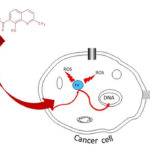
The primary source of energy for nearly all living cells is glucose. This simple molecule of sugar, a so-called monosaccharide can be found not only in sweets but also from the digestion of more complex carbohydrates molecules
Modalities to overcome cancer cells safeguard

The increase of intracellular concentration without raising the applied drug doses is big challenge for cancer treatments. Cancer cells employ multiple mechanisms to resists the anticancer drugs action. One of the mechanisms involves P-glycoprotein. The role of
Biotransformation of bufadienolides in human liver microsomes

Bufadienolides are a family of cardiac aglycone compounds with the inhibitory activity of Na+/K+-ATPase. They exist extensively in both animal and plant species, such as Crassulaceae, Ranunculaceae, Bufonidae and Colubridae families. In traditional Chinese medicine, bufadienolides are
Osteoporosis and erythroid cells: is there a connection?

The skeleton is an extraordinary structure paramount not only for our movement but for multiple other functions as well. Bones are dynamic organs that continuously remodel through life in a process where mature bone is removed by
Faceted liquid droplets wag their tails

Nature typically strives to minimize the energy of a system. Making water flow downhill and a stretched rubber band shrink when released are just two examples. A commonly experienced consequence of this universal principle is the spherical
Swiss physicians’ perspectives on advance directives in elective cardiovascular surgery

Advance directives (AD) are a written document in which patients express their wishes regarding care and treatments in case they would become incompetent. When patients lose competency due to coma or confusion, for instance, AD can help
The fundament of food, crop protein production, is threatened by climate change

Income growth, urbanization, and changes in lifestyles and food preferences combined with continuing population growth lead to increasing demand for plant protein production worldwide. All the proteins we eat are produced by crops, including the proteins we


