Category Archives: Research
Chronic rhinosinusitis patients with gastroesophageal reflux disease have a significantly higher prevalence of atopy and asthma

An association between chronic rhinosinusitis ( CRS ) and gastroesophageal reflux disease ( GERD ) has been previously reported. GERD shares several similarities with the pathophysiology of CRS and atopy. CRS and GERD both can present with
Current treatment for rheumatoid arthritis fails to improve patient’s body composition or physical function
Adverse changes in body composition – specifically, reduced muscle mass (MM) and increased fat mass (FM) – are characteristic of rheumatoid arthritis (RA). Indeed, when body composition is assessed, significant muscle loss is evident in ~67% and
Lyophilised mannitol: an attractive solid dosage from excipient

Mannitol is a pharmaceutical excipient that is receiving increased popularity in solid dosage forms. This study contributes to the development of mannitol as a potential excipient of the first choice. The purpose was to address the theory
Selective detection of the methyl orange dye among anionic guests

Azo dyes have found various applications in science, medicine and technology. Methyl orange dye is commonly used as pH-indicator that changes its color while protonated is another well-known hydrophobic anion. It is known that water-soluble macrocycles with
Citizen’s collaboration and aerial photographs can help understanding temporary streams

Temporary streams are those that undergo recurrent cessation of water flow or even complete disappearance of surface water. Waterways in which flow interruption occurs are frequent at headwaters in any climate type and are particularly conspicuous in
A predictive approach for nanotoxicity assessment using stem cells

Advance in nanotechnology has prompted the science world to recognize the risk and potential health effects associated with the growing as well as incongruous use of nanoparticles. The current methods often employ a predictive toxicology approach that
Cholesterol: the eyes have it

Cell membranes are a complex mosaic of lipids and proteins. The membrane phospholipids are arranged in a bilayer with their polar heads interacting with the surrounding water and their hydrocarbon tails forming a hydrophobic core. Membrane proteins
Pigments in flowers are not only attractive: Anthocyanins as a sunscreen for the pollen grains

Anthocyanins are the largest group of water-soluble pigments in the plant kingdom. They are responsible for most of the red, pink, purple and blue colours of flowers and fruits, where they mostly play a signalling role. In
Microbial assisted electrochemical desalination: a green option for water/wastewater treatment
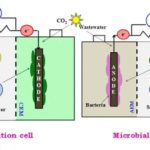
Wastewater discharged from industries can lead to adverse ecological effects. Commonly used conventional technologies for wastewater treatment are efficient in removing organic matter and nutrients (N and P) but less effective to reduce salinity. High salt concentrations
Genetic and non-genetic animal models for Autism Spectrum Disorders
Autism spectrum disorder (ASD) is a heterogeneous group of neurobehavioral problems with genetic and environmental origins. The major neurobehavioral changes are manifested by persistent deficits in social and communication interaction, deficits in developing, understanding and maintaining relationships,
When sulfur meet RuO2: enhancing polysulfide redox reaction for advanced Li–S batteries

The ever – growing demand for energy – driven by steady population and economic growth as well as continuous advancements in lifestyle – presents serious challenges for today’s global societies. Strong efforts have been made to reduce
Perlecan HS produces TGF-β1 deficiency in mutant skin

The skin is the largest organ in the human body and one of it’s most dynamic. Skin has a large surface area and protects the body from the external environment and is challenged by many poisonous substances
When is the vascular healing complete after the drug eluting stent implantation?

Currently, drug eluting stent (DES) is one of the most important medical devices for percutaneous coronary intervention in patients with coronary artery disease. 1st generation DES decreased the frequency of restenosis compared to bare metal stent, but
Mutual trust between managers and their teams is hard to find: can we increase it?
It is not easy for managers and their teams to trust each other. In their study, Brower et al. (2009) observed that, in the hotel and resort industry, only 26% of teams showed both a high level
How to model a “real” tumour outside the body

Cancer is a highly complex disease, which causes high mortality and suffering and remains incompletely understood. In fact, cancer is viewed by many not as a single disease but a collection of diseases with distinct features, pathways
Neurons the decision makers

This work is concerned with understanding the synthesis of electric signals in the neural system based on making pairwise comparisons. Fundamentally, every person and every animal is born with the biological talent to compare stimuli from homogeneous
Egr-1, an inducible switch in the cardiovascular response to injury
The vascular system normally facilitates the passage of blood, nutrients and oxygen throughout the body whilst maintaining a non-thrombogenic surface. Our blood vessels therefore play a key role in homeostasis. In response to vascular injury however there
Nursing students’ perceptions of community care

The increase in extramural healthcare leads to a need for more well-educated community nurses. The number of nursing students who see this healthcare field as interesting for their future career, however, is limited. Many students tend to
Mutations in the SHOX2 gene contribute to irregular heartbeats

Heart rhythm disorders contribute significantly to cardiovascular morbidity and mortality and represent a major health issue. Developing approaches towards disease prediction and treatment of cardiac arrhythmias is therefore an important topic in healthy aging. Atrial fibrillation (AFib)
The moving lines of electron spectra: emergence or artifact?

As known, positions and specific shapes of spectral lines characterize a nature and properties of chemical elements and their compounds. But what is meaning a changeable position of any spectral line? When some lines displace continuously within