Fungal chitin treatment reestablishes the anaerobic bacteria and decreases the intestinal inflammation in mice

The gastrointestinal (GI) microbiota acts a natural barrier to colonization and proliferation of opportunistic pathogens, thereby decreasing the risk of intestinal infection and disease. Deregulation of the dynamic crosstalk between the microbiota, intestinal epithelial cells and immune
Prognostic factors for PM/DM-ILD. A dilemma of treatment intensity?
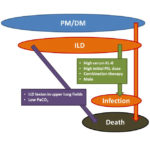
Polymyositis (PM) and dermatomyositis (DM) are idiopathic inflammatory myopathies of unknown causes. In PM/DM, interstitial lung disease (ILD) is one of the extramuscular manifestations and the principal cause of death. To improve the prognosis of PM/DM-ILD, it
Analyzing the past to understand the future of anti-obesity therapeutics

Causes for obesity are not only related to the amount of food we intake and how much exercise we make. There are some people that have faster metabolisms, therefore are less likely to suffer from obesity and
People’s tweets predict their decisions

People spend a lot of time on the internet: they write on social media, shop for products, listen to music, and click on ads. In my research with Dr. Phillip Wolff at Emory, I ask how much
Sleep deprivation disrupts visual scanning for driving

Sufficient good quality sleep is a necessity for the human brain to function normally. Sleep is primarily regulated by the in-built biological clock that is synchronised with the day-night cycle of our environment, which prepares the body
Stress induced Eh jumps are caused by sulfide efflux from Escherichia coli cells

It was previously established that in aerobic cultures of a number of bacteria subjected to stress, there is a sharp change in the redox potential (Eh) of the medium to reductive (negative) values. Eh jumps were detected
Adopting mammary development gameplay in breast cancer initiation and progression

The process by which the breast changes during puberty and lactation is incredibly unique. Those changes are essential for the functional mammary gland. These changes are triggered and orchestrated by hormones. Such hormonal changes start during pregnancy
Inflammatory Bowel Disease: medical vs surgical vs “sociological” treatments
The human gut continuously hosts an excess of white blood cells in its wall thickness, this lingering inflammation serving to protect us from the outer world that uses the gut as an invading pathway. Unchecked gut inflammation
Statins: Good for the heart, but do they impact the brain?

High cholesterol, termed hyperlipidemia, is a risk factor for cardiovascular disease. Therefore, keeping cholesterol levels low through diet and exercise has proven benefits for reducing heart disease risk. For adults who cannot meet their cholesterol targets through
Risk of non-alcoholic fatty liver disease in patients with type-1 diabetes

In this modern world non-alcoholic fatty liver disease (NAFLD) is one of the most common forms of chronic liver disease. It is defined as the presence of fatty liver disease in the absence of excess alcohol or
Got blood!

Blood has been recognized as a life giving force from time immemorial. The first recorded attempt at human to human transfusion was recorded in 1492 when Pope Innocent VII succumbed in an attempt at a transfusion. Successful
Not frozen in time: the past matters to the relationship between body weight and insulin

Insulin is a hormone which regulates how your food fuels your body. The food you eat is digested and converted into glucose, which then travels through your blood to reach all of the organs and tissues in
Lipid membrane nanosensors for environmental monitoring

Research on environmental and food biosensing remains blooming for two decades now, attracting scientists from diverse fields. From an analytical viewpoint, biosensors offer a number of benefits when compared to the conventional techniques (e.g., chromatography or immunoassays),
Butyrate enhances mitochondria respiration when challenged with oxidative stress

Butyrate is a ubiquitous short-chain fatty acid (4 carbons in length) that has been shown to have many health benefits. Butyrate is principally produced by the trillions of microbial cells that live in our intestine commonly known
Arthropod-specific viruses: where did they come from, what are they doing and where are they going?
Among the hundreds of arthropod-borne viruses (arboviruses), some, for example dengue, West Nile, and yellow fever, cause significant human infections. Millions of infections with symptoms ranging from mild fever to fatal encephalitis occur annually. The suffering is
Healthy commuting – exposure to particulate matter using different transport modes

Atmospheric particulate matter is one of the leading risk factors for premature death worldwide. Short-term exposure leads to worsening of respiratory symptoms, especially for patients with pulmonary diseases like asthma and COPD whereas long-term exposure increases the
Hypertrophic scarring: the rabbit ear model for studying dermal fibrosis

Skin is the largest organ in body with multiple vital functions. Apart from its significant role in maintaining the body temperature and prevention of water loss, the appearance of skin has a significant effect on one’s psychological
Macrophages in atherosclerosis; the good, the bad and the foamy?

Atherosclerosis is a chronic inflammatory condition in which arteries are narrowed due to the deposition of plaque material to the artery walls. This narrowing can give rise to other cardiovascular events like thrombosis or a stroke. One
Compounded medication for patients with rare diseases
Pharmaceutical compounding is the preparation of unlicensed medicines in order to meet specific patient needs that do not have a licensed (commercial) medicine available on the market. Especially for patients with rare diseases it is complementary when
The importance of immature cancer cells in predicting patient outcome

The word “cure” for breast or any other type of cancer might be unfair to a patient since this will give the individual a false sense of comfort. The misuse of `cure’ is evident in breast cancer