Yearly Archives: 2017
DNAJB6 – an early-stage scavenger of amyloidogenic peptides

A molecular chaperone has been discovered that binds to amyloidogenic peptides and delays onset of aggregation and neurodegeneration. Chaperone proteins, existing in the cells of all organisms, are helper proteins that serve to keep the proteins in
Can genetic changes in ApoM gene differentiate the patients at high risk of recurrent venous thrombosis?

Venous thrombosis (VT) is a major health problem worldwide and third most common type of cardiovascular disease. It causes more than half a million deaths every year in the European Union. An alarming proportion of VT patients
Classification based on quantiles
Supervised classification is about finding formal rules to classify observations into one of two or several known classes based on training data for which the classes are known. The observations are characterised by several variables or features.
Chromosome gains and losses in the human brain are probably less important than previously thought

In general, each human cell contains 46 chromosomes: 23 chromosomes from each parent. Before a cell divides all chromosomes are duplicated. The cell has several mechanisms to ensure that during cell division the chromosomes are evenly distributed
Which healthcare providers are more likely to screen women for domestic violence?

At least one in four U.S. women experience intimate partner violence (IPV) in their lifetime. Victims often need intensive physical, emotional, and financial services to recover from their abuse. Early and careful screening could reduce suffering, disability
Vodka and wine consumption: good for your liver?
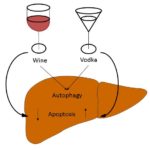
Approximately 50 million Americans are affected by metabolic syndrome. Metabolic syndrome is defined as hypercholesterolemia, hypertriglyceridemia, high blood pressure and glucose intolerance leading to type 2 diabetes mellitus. Patients with metabolic syndrome have an increased risk of
The mother’s latent immune disease can affect her unborn child

At birth our immune system is still immature but fully develops during our childhood, and when we encounter different infectious threats it adapts and generates a memory that will protect us if we are exposed to the
The gut balance solution to obesity

The gut hartbors trillions of microbes that support many critical functions throughout the body (Fig. 1.). These microorganisms collectively are called The Gut Microbiome and are mainly bacteria but are also known to contain yeasts, and even
Staphylococcus pseudintermedius infection: a downside to man’s best friend?
Staphylococcus pseudintermedius is a bacteria identified in the past decade that is increasingly recognized to cause infections in people. S. pseudintermedius colonizes ~90% of healthy dogs, and the common sites are the pharynx, nares, rectum, and skin.
Nanoscale engineering of heterostructured anode materials for boosting lithium ion storage

Rechargeable lithium ion batteries (LIBs), as one of the most important electrochemical energy storage devices, currently provide the dominant power source for a range of devices including portable electronic devices and electric vehicles due to their high
Gamete activation: what else?
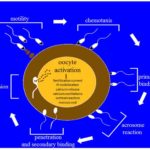
Fertilization is the complex and unique process that marks the creation of a new individual. Mutual activation of gametes is a crucial event during fertilization where the two metabolically quiescent cells, upon a reciprocal signal, undergo structural
‘HATs On’: A small molecule with big potential in epigenetic therapy for Parkinson’s disease

Parkinson’s disease (PD) is a common, progressive and age-related neurodegenerative disease, whose incidence is set to double by 2030 as people are living longer. At present, it is estimated that ten million people worldwide suffer with PD.
What’s your move? The ecological influence of personality-dependent space-use patterns in animals

In ecology we often try to answer questions about the processes that determine population dynamics, and interactions between individuals within or between species (e.g., competition for resources and predator – prey dynamics, respectively). The way animals move
Nanoparticle can directly permeate across cell membrane without membrane disruption

Nanoparticles (NPs) have been attracting much attention for biomedical and pharmaceutical applications. In most of the applications, NPs are required to translocate across the cell membrane and to reach the cell cytosol. Experimental studies have reported that
TSPO, bond of ages

In the microbic world of about 3.5 billion years ago, unicellular eukaryotes (organisms with cell nuclei) started to form a symbiosis with prokaryotes (organisms without cell nuclei). These prokaryotes were bacteria that could breath oxygen, whereas the
Holding the last line of defence against malaria

Malaria contributed to the deaths of almost half a million people worldwide in 2015. This disease mainly affects people in the developing countries and imposes a serious health and financial burden. Artemisinin (ART)-based combination therapy is the
Control of plant architecture by gravity

Plants are permanently tethered to the soil and thus, unlike animals, they cannot physically escape from harmful situations. Instead, they have evolved mechanisms to adapt their growth to an ever-changing environment. A simple example of this phenomenon,
A new role of neutrophils in the promotion of experimental abdominal aortic aneurysm
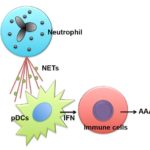
Neutrophils are the most abundant type of white blood cells in the human body and account for approximately 60% of all cells circulating in the bloodstream. They are the first cells recruited in response to an infection and constitute
Estimating occupational exposures in large general populations made easier
In occupational epidemiology we are interested in associations between exposures that occur in the workplace and detrimental health effects. Ultimately with the goal of preventing harmful exposures to continue. Simply comparing exposed workers with non-exposed workers will
MutS, a guardian of the DNA replication fidelity

Spontaneous mutations act as engines to drive evolution; and lead to the development of antibiotic resistance by pathogenic bacteria and the initiation of human diseases. An important source of mutations corresponds to biosynthetic errors generated during replication