Category Archives: Research
Multitasking in navigation in desert ants: combining multiple strategies

The highly social ants live in nests, and all their foragers must navigate their way home after finding food. Not surprisingly then, these small-brained travelers display proficient navigational prowess. Much studied are desert ants. They keep track
Using Rh immune globulin in pregnancy to prevent Rh disease

In addition to the ABO type, Rh(D) is also a major antigen, an antibody-generating protein, on the red blood cell (RBC) surface. An Rh(D)-negative person, one who does not have the Rh(D) antigen, can form anti-D antibodies
Male infertility and dental health status: the missing link?
More than 48.5 million couples worldwide are unable to conceive, and at least 40-50% of the cases are associated with male factor infertility (MFI), affecting approximately 31 million men worldwide. MFI is defined as alterations in sperm
Identification of new medicines for novel pathogen protein kinases with substrate-dependent assays

Protein kinases (PKs) are enzymes that transfer a phosphate group, a process called phosphorylation, from the ATP to another protein, which acts as a phosphoacceptor (Fig. 1). Phosphorylation of proteins regulate their activity, and these reactions are
A new hypothesis of autoimmune diseases: stress and the nucleolus

Autoimmune diseases (AIDs) have complicated pathologies influenced by genetic, epigenetic and environmental factors. Mechanisms of AIDs remain mysteries but numerous hypotheses have been proposed. Several hypotheses are discussed to present their unique explanations and to demonstrate that
MicroRNAs identify high-risk colon cancer patients

Choosing the optimal anticancer treatment for each patient requires proper disease staging. Staging is usually assessed according to the TNM system: tumour size (T), number of nearby lymph nodes affected (N), and metastasis, or spread to other
Perpendicular-plane configuration to prevent backward electron transfer

In organic chemistry, the outcomes of thermal and photochemical reactions are different. Reactions that do not proceed even at 200 °C proceed photochemically below room temperature, e.g., photosynthesis, the conversion of light (solar) energy to chemical energy
Reading “don’t cut the bread” triggers motor inhibition in the brain

All languages have negation markers, which allow the speakers to deny something, for instance the presence of an object (there is not bread), a feature (John is not cleaver), an action (you do not play piano), and
Curiosity and flexibility help birds to master rapid environmental change

Birds are one of the most mobile organisms on earth due to their ability to fly. This allows them to use areas far apart for breeding and non-breeding to exploit the best conditions throughout the year. For
Safety of iron oxide nanoparticles – a regulatory perspective

The ample domain of clinical as well as theranostic applications of super paramagnetic iron oxide nanoparticles demands the need for establishing a complete toxicological profile of these nano particles in a regulatory perspective prior to its intended
Activity Theory: quest for the unattainable and hope for the future
This paper addresses current problems of theoretical psychology focusing on future perspectives of the Activity Theory (AT). AT (Leontiev, etc.) is the most internationally known development of Russian psychology. AT is rooted in a long European philosophical
DNAJB6 – an early-stage scavenger of amyloidogenic peptides

A molecular chaperone has been discovered that binds to amyloidogenic peptides and delays onset of aggregation and neurodegeneration. Chaperone proteins, existing in the cells of all organisms, are helper proteins that serve to keep the proteins in
Can genetic changes in ApoM gene differentiate the patients at high risk of recurrent venous thrombosis?

Venous thrombosis (VT) is a major health problem worldwide and third most common type of cardiovascular disease. It causes more than half a million deaths every year in the European Union. An alarming proportion of VT patients
Classification based on quantiles
Supervised classification is about finding formal rules to classify observations into one of two or several known classes based on training data for which the classes are known. The observations are characterised by several variables or features.
Chromosome gains and losses in the human brain are probably less important than previously thought

In general, each human cell contains 46 chromosomes: 23 chromosomes from each parent. Before a cell divides all chromosomes are duplicated. The cell has several mechanisms to ensure that during cell division the chromosomes are evenly distributed
Which healthcare providers are more likely to screen women for domestic violence?

At least one in four U.S. women experience intimate partner violence (IPV) in their lifetime. Victims often need intensive physical, emotional, and financial services to recover from their abuse. Early and careful screening could reduce suffering, disability
Vodka and wine consumption: good for your liver?
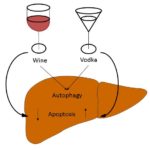
Approximately 50 million Americans are affected by metabolic syndrome. Metabolic syndrome is defined as hypercholesterolemia, hypertriglyceridemia, high blood pressure and glucose intolerance leading to type 2 diabetes mellitus. Patients with metabolic syndrome have an increased risk of
The mother’s latent immune disease can affect her unborn child

At birth our immune system is still immature but fully develops during our childhood, and when we encounter different infectious threats it adapts and generates a memory that will protect us if we are exposed to the
The gut balance solution to obesity

The gut hartbors trillions of microbes that support many critical functions throughout the body (Fig. 1.). These microorganisms collectively are called The Gut Microbiome and are mainly bacteria but are also known to contain yeasts, and even
Staphylococcus pseudintermedius infection: a downside to man’s best friend?
Staphylococcus pseudintermedius is a bacteria identified in the past decade that is increasingly recognized to cause infections in people. S. pseudintermedius colonizes ~90% of healthy dogs, and the common sites are the pharynx, nares, rectum, and skin.