Monthly Archives: March 2016
How does aspirin inhibit melanin synthesis?

Non-steroidal anti-inflammatory drugs (NSAIDs) are known to act by directly suppressing the activity of cyclooxygenase, the key enzyme catalyzing the biosynthesis of prostaglandin, which induces inflammation. Therefore, NSAIDs are usually used for treating pain, inflammation, and fever.
Parallel Reaction Monitoring: A targeted mass spectrometry method

Mass spectrometry has emerged as a highly sensitive technique to study proteins and proteomes. Proteome is an entire repertoire of proteins in its various forms present in a cell, tissue or an organism. The study of proteome
Renal cell carcinoma: can we identify patients with advanced disease?

Kidney cancer is among the 10 most common cancers in both men and women with approximately 61,560 new cases and 14,080 deaths from this disease expected in 2015. Clear cell renal cell carcinoma (ccRCC) is the most
Climate change may add significantly to the impacts of pollution and habitat loss on fish populations

Climate change is seen globally as a major environmental risk, along with pollution and the loss of natural habitats. Many regions of the world are predicted to experience increasing climatic fluctuations and extremes, including either drought or
The inflamed skin in atopic eczema contributes to the disrupted skin-barrier

Atopic dermatitis, also known as atopic eczema or neurodermitis, is a chronic allergic skin disease affecting 15 – 30 % of children and 2 – 10 % of adults in industrialized countries. Patients suffer from inflamed, red
Calcium disturbances in Parkinson’s disease

Parkinson’s disease is a common disorder of the brain that affects around 127,000 people in the UK alone. The disease is characterised by the loss of nerve cells (neurons) that control mobility. Symptoms include muscle stiffness, tremor
How to increase heights in short populations such as the Philippines
Interactions between nutrition and various infections in developing countries are complex and analyses of the inter-relationships requires data from longitudinal studies spanning several years and a comprehensive framework facilitating the formulation of food and health policies. There
A natural transgene may help plants to adapt to local conditions

Transgenes are genes that have moved from a donor to a recipient organism via a process known as horizontal gene transfer (HGT), in the absence of sexual reproduction. The genetic modification of crop species involves the deliberate
Certain transcripts synthesized by RNA polymerase III in mammals became polyadenylation-competent

It has been known for 40 years that eukaryotic mRNA molecules contain a region of up to 250 adenine residues at the 3’ end. This poly(A) tail mediates mRNA nuclear export, translation, and protection from degradation in
Is the behaviour of the isotope polonium-210 conditioned by the acidity of the waters?

The Acid Mine Drainage (AMD) is a phenomenon that takes place when sulphide minerals are exposed to atmospheric conditions. In the presence of oxygen and humidity, the sulphides are oxidised releasing the elements contained in the rocks
Electrospun CH3MOF-5/PAN composite nanofibers for SPE of levonorgestrel and megestrol acetate

Electrospinning is a very simple , versatile and high – throughput method for generating continuous nanofibers from a wide range of materials including polymers , composites and ceramics with controllable diameters , compositions and morphologies. It was
Enrichment design accommodating the biomarker misclassification

Increased understanding of the mechanistic heterogeneity of diseases has brought us to the era of molecularly targeted therapies (MTAs) in clinical oncology. The MTAs block the growth of cancer cells by identifying and attacking specific biomarker pathways
Life on sulfur. Why we need complete genomes

The ability of bacteria to grow on inorganic compounds like sulfur was discovered by Russian microbiologist Sergey Winogradskij in 1888. First, he studied a sulfur bacterium of the Beggiatoaceae family to demonstrate that it can produce energy
Inventing an new flap for small to medium-sized defects of the knee

Coverage of soft tissue defects of the knee due to multiple operations, trauma and infection remains a surgical challenge. Often these defects are repaired using free tissue transfer. The aim of the current study was to find
OCT provides a better understanding about retinal damage in two rare neuromuscular diseases

The facial – scapular – humeral muscular dystrophy (FSHD) and myotonic dystrophy type 1 (DM1) are neuromuscular diseases with systemic clinical manifestations. Although rare, they are genetic myopathies most frequently encountered in adults. The diagnosis is confirmed
Medical products from human blood plasma in Scotland

A number of important medical products are obtained from human blood plasma; these fall into three main categories: – Immunoglobulins (antibodies) for treating disorders of immunity or certain infections, as well as for preventing rhesus disease of
Not all ticks bite you

If you are an eager hiker in forests of Europe, you have likely come across or at least heard of the sheep tick, Ixodes ricinus. Ticks are creepy! The sheep tick is well-known to transmit the pathogens
Being heard in the herd: do harp seals use pitch changes to reduce the cocktail party effect?
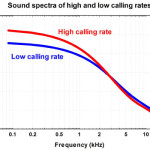
Every March, hundreds of thousands of harp seals migrate south to the Gulf of St. Lawrence, Canada, to give birth on the pack ice and to mate. They have a large repertoire of underwater calls that they
Folding proteins with a pich of salt

The slow but unstoppable progress of evolution has enabled, step-by-step, mutation after mutation, the conquest of almost every possible environment on Earth. Even in those places where conditions are far from “standard”, where the presence of organisms